Greetings!
Welcome to our latest monthly newsletter for your reading enjoyment. If you think a friend or colleague would benefit from this newsletter, please send them a copy by clicking on the "Forward email" link, at the end of the newsletter. That will send them a copy, but it will not add them to the mailing list.
We welcome your feedback or suggestions. If you would like to provide feedback or suggest topics for future issues, please click on the email link for Bill or Dave.
Finally, if you wish to be removed from our mailing list, please click on "SafeUnsubscribe" link at the end of the newsletter
Happy reading!
Bill Spreitzer and Dave Vogelpohl
919-388-3600 and 919-544-3787 |
| Recognition and Affirmations |
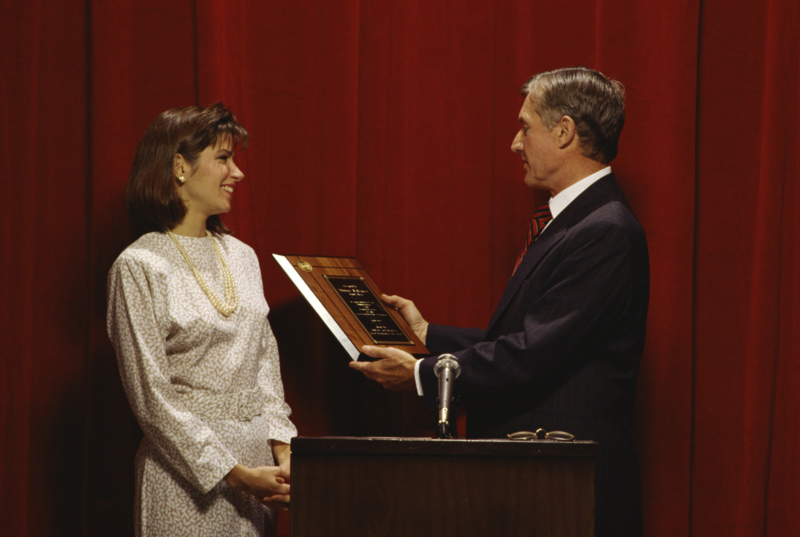 I read an article recently entitled the "Top 10 Excuses for NOT Giving Recognition. " Of course, the purpose of the article was to dispel the "negative conditioning" that tends to go along with the excuses. Some of the excuses were: "I don't have time", "People don't care about it all that much", and my favorite, "It's not MY job!" Regardless of the excuse we use, let's face it, we probably don't give sufficient recognition to those around us. Whether it be our spouse, co-workers, friends or acquaintances we could all use more recognition. As Ken Blanchard says in The One Minute Manager; "To help people reach their full potential, catch them doing something right!" I read an article recently entitled the "Top 10 Excuses for NOT Giving Recognition. " Of course, the purpose of the article was to dispel the "negative conditioning" that tends to go along with the excuses. Some of the excuses were: "I don't have time", "People don't care about it all that much", and my favorite, "It's not MY job!" Regardless of the excuse we use, let's face it, we probably don't give sufficient recognition to those around us. Whether it be our spouse, co-workers, friends or acquaintances we could all use more recognition. As Ken Blanchard says in The One Minute Manager; "To help people reach their full potential, catch them doing something right!"
But there is an alternative to relying on others to give us recognition and that is affirmations. The major benefit of both of these is that it keeps us positive and reinforces the behavior and characteristics that help us be more successful. The power of affirmations has been proven time and again and is particularly highlighted by Shad Helmstetter in his book "What To Say When You Talk To Yourself". I use a particular formula for affirmations which is particularly effective. It starts with "I am a person who ...." By filling in the blank with something that we would like to become or have we are adding to our self-confidence and increasing the likelihood of having it occurring in our lives.
So, whenever you're feeling down, try recognizing someone around you or reciting your affirmations to give yourself a positive boost. |
|
Satisfied Customers or Loyal Customers! |
Is There A Question?
According to author, Jeffrey Gitomer -"Customer Satisfaction is Worthless, Customer Loyalty is Priceless"
Apparently companies like Costco understand the difference. They have been recognized as the leader in customer loyalty among warehouse retailers, rocketing from start-up to Fortune 50 status in less than 20 years, while spending next to nothing on advertising and marketing because of word of mouth referrals. They know that companies with the highest customer Loyalty typically grow at more than twice the rate of their competition. And, by Raising Customer retention rates by 5% it is possible to increase the value of an average customer by 25% to 100% (The Loyalty Effect, F. Reichheld). Rather than spending time trying to remember if you've ever seen a Costco advertisement, lets talk behavior and why emotions matter in the customer experience.
Regardless of how high a company's satisfaction levels may appear, satisfying Customers without creating an emotional connection with them has no real value. This should be a red flag issue, especially when you consider that it's reported that 90 to 96% of customers won't complain. They simply walk away. Emotions Matter... because customers and staff are always emotional, and in service industries because it is so personal and stressful, the emotions are more intense. A healthy way to view emotions is not as a problem But as the basis for forming relationships - This is how to develop Loyalty!
Start with a discussion about the vision of the company. If it's written, you can usually find a statement about customers under glass on a conference room wall. It often goes something like this - "We believe Customer Satisfaction is our #1 Priority." But when you ask people inside the organization what that statement really means and how it's measured, the silence is often deafening. If the people in the organization don't have a clear definition of what you mean by customer satisfaction, then how do they convey it to your customers?
I have come to the realization that "Customer Loyalty is all that matters," especially when you define loyal customers as people who will do business with you again, tell others about you without hesitation, and refer people they care about to do business with you. Hugh McColl, referred to as the greatest banker of all time, founder of North Carolina National Bank, that ultimately became Bank of America had a simple philosophy: "I take care of my people, my people take care of my customers, my customers take care of my shareholders." He never said, "I want to be the number one bank on the planet." Loyalty is earned. It stems from actions that are taken and the words that are spoken by employees. It's not just business as usual!
Author: Norm Gauthier. Reprinted and adapted with permission for Sorrell Associates. |
|
Building The Best 'Before and After' Experience |
|
In previous issues we discussed the importance of helping your best employees grow, mainly by giving them the proper amount of attention. This provides them with the experience they crave, thereby increasing your rate of retention. In this article, we're going to take a small step backward for the purpose of going forward.
That small step involves what the candidate hears during the interview process vs. what they experience after accepting the offer and starting their employment. This "before-and-after" dynamic is crucial to the overall retention experience, and it's all the more crucial because many employers don't take the time to examine what type of experience they're providing for their new employees. And then they wonder why they take another job after only three months.
It's Human Nature
The "before-and-after" experience is a smaller component of the larger, more complex subject of on-boarding, which we'll be discussing in future articles. However, it differs from on-boarding in the respect that it continues for a greater length of time after the candidate becomes an employee-for at least the three-month period mentioned above, and perhaps even longer.
What it comes down to is this: you have to pay as much attention to what you say and do both before the candidate is hired and after they're hired as the candidate does.
The fact of the matter is that the majority of company officials fail to do that. The reason? They don't have the time to do it, or perhaps more accurately, they think they don't have the time. Sure, everybody's busy, but those people willing to apply energy to critical areas are the ones that will be more successful in the long run, and providing the best experience to candidates in this situation is most definitely critical.
You see, an employee is mentally comparing and contrasting what you say about the company and the position during the interview process with what they experience after they're hired. They do this either consciously or subconsciously. (It's human nature. . . there's no way around it.) And if the notes they compare don't match, then the experience you're providing is ultimately a negative one. Consequently, your chances of retaining that employee decrease dramatically.
A Hierarchy of Needs
Okay, so what are some of the areas about which employees take (and compare) mental notes? There are a few, to be sure, but there's also a hierarchy of importance:
· Job requirements - This is the one that can cause you the most damage. Nothing will deflate a new employee more quickly than discovering that what they were told about their new position during the interview was nothing like it actually is once they started the job.
· Company culture - Telling a candidate during the interview stage that they won't be expected to work past 5 p.m. isn't wise if the company culture is one that dictates - in an unwritten fashion - that longer hours are not only encouraged, but expected.
· Perks - This could include the availability of a company car, the number of holidays the company observes each year, the amount of vacation time afforded new employees, or even the details of their health insurance plan.
· Miscellaneous expectations - If the new employee has been told that they'll meet with their immediate supervisor for an hour every week for the first four weeks of their employment, and that doesn't happen, then their expectations were not met. This category can include a host of other things, including what equipment you're providing the employee, the length of their lunch break, the company's policy regarding personal phone calls, etc.
There are two measures that you can undertake to ensure that you're providing the best "before-and-after" experience. The first is to meticulously write down what you tell candidates during the interview process and then consult the list in the weeks after the candidate begins employment. Keep an eye out for any discrepancies. The second measure is to conduct a "post-interview" with the employee and inquire as to whether or not their expectations are being met. This is probably the more difficult of the two measures, since there's a prevailing company mindset that stipulates new employees "must prove themselves." (That's why companies have a probation period.)
What many company officials fail to realize, though, is that they're on probation, too, as is the company in general. Not only does the employee have something to prove, but in a way, you do, as well. By realizing this and addressing it in a pro-active fashion, you can enhance the experience that new employees receive and dramatically improve both their satisfaction and your overall rate of retention.
Copyright Sorrell Associates, LLC all rights reserved worldwide. İGary Sorrell
|
|
|
|
|
|
| Employment Laws You Should Know |
|

Employee Retirement Income Security Act (ERISA) governs how private employers must manage employee benefit plans, such as pension funds, health insurance, and disability benefits. ERISA sets certain limitations on the way the funds in such plans may be invested, and prohibits an employer or plan administrator from wrongly refusing to provide plan benefits, such as refusing to pay disability benefits to a plan participant who is truly disabled.
Employee rights include the right to privacy and to be reinstated to work under certain circumstances if the employee serves with the military. It also limits on an employer's right to conduct a background or credit check, garnish employee wages, or require an employee to take a polygraph test.
Employment contracts include written agreements signed by the employer and employee, as well as "implied" contracts created by employee handbook terms or verbal agreements. An employment contract can govern the length of employment, vacation, benefits and stock ownership, circumstances under which the employee may be fired, and whether the employee may compete with the employer after he or she has left the job.
Check with your legal representative for legal advice and clarification on these laws.
|
|
Opportunity... Often it comes disguised in the form of misfortune, or temporary defeat.
-Napoleon Hill
There is no future in any job. The future lies in the person who holds the job.
─ George Crane
In the middle of difficulty lies opportunity.
─ Albert Einstein | |
|
Web Site Of The Month
|
FreeDemographics is brought to you by SRC and is the industry's leading FREE Web site for business professionals at all levels seeking to perform quick and reliable market analyses in an easy-to-use Web environment. Your FREE subscription provides complete access to historic and present U.S. Census data, including data collected from the 1980, 1990 and 2000.
FreeDemographics offers you the ability to create your own custom market analysis reports based on a number of selected demographic variables for any geography in seconds. You'll be able to generate a host of different analyses such as radius, summary, comparison and ranking reports for all U.S. geographies. Check it out at: www.FreeDemographics.com | |
|